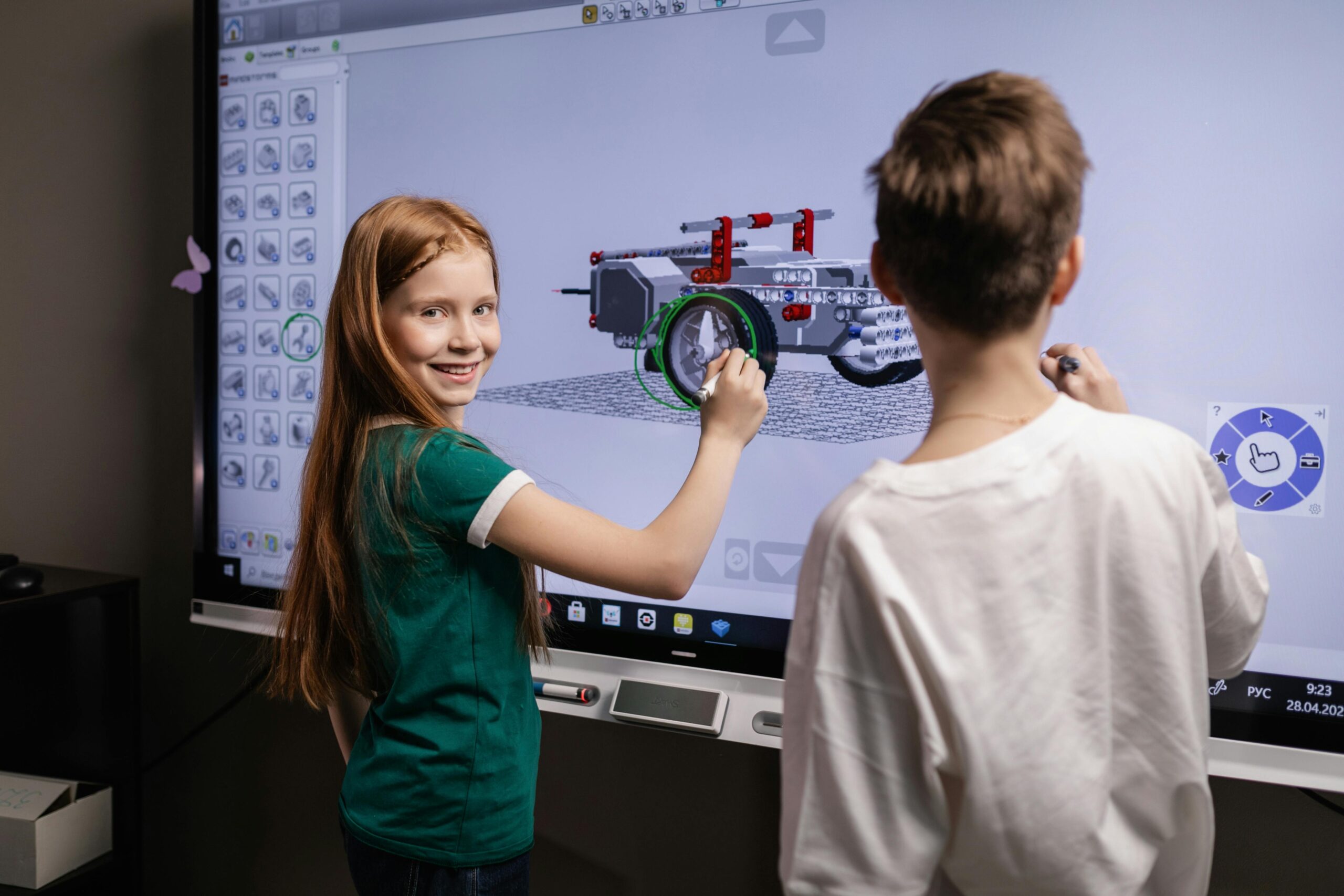

Image credit: Pexels
From adaptive lesson planning to real-time assessments, AI-powered education tools are changing how teachers teach and students learn.
Artificial intelligence has introduced major changes to educational systems, creating teaching spaces suitable for individual student needs. The educational system has always struggled to overcome three main challenges: widening student achievement gaps, teacher exhaustion, and decreasing student participation. To address these issues, educators are turning to AI-powered platforms to upgrade their methods of delivering educational content and assessing student progress.
The new wave of educational AI is not limited to automating classroom tasks. AI-powered platforms are also improving comprehension, accessibility, and real-world learning outcomes at scale. Instead of replacing educators, many companies are embracing AI as a support system.
Education Is Moving Beyond Memorization
Traditional education models relied on rote memorization, standardized testing, and high-pressure examinations. While such systems might reward short-term recall, they often fail to deliver genuine understanding.
AI learning platforms are offering continuous feedback, practical application, and personalized comprehension. Instead of static textbooks and repetitive assignments, AI tools are generating interactive stories, simulations, quizzes, videos, and contextual real-world examples, tailored for different learning styles.
Among the companies advocating for AI learning platforms is TeachBetter.ai, which has focused on redesigning teaching methodologies rather than simply digitizing existing systems.
“We have to completely transform our system from driving memorization of concepts to driving deep understanding and application of concepts,” said Binit Agarwalla, Founder of TeachBetter.ai.
AI Is Becoming a Personal Assistant for Teachers
Educational AI has entered the space when many teachers are grappling with mounting administrative pressure. Time-consuming preparation work, such as lesson planning, grading, and resource creation, is a constant concern for educators.
AI-powered teaching tools efficiently handle these repetitive tasks by generating lesson plans, worksheets, assessments, multilingual study materials, and personalized learning resources within seconds.
TeachBetter.ai has adopted an all-in-one platform strategy, combining several AI-driven classroom functions into a single interface. The platform supports more than 80 languages and adapts content for different classroom levels and learning requirements.
Real-Time Assessments Could Replace High-Stakes Testing
Standardized testing has long been criticized for offering only limited snapshots of student performance. Infrequent exams can increase anxiety while failing to accurately reflect ongoing learning progress.
AI-powered continuous assessments are emerging as an alternative. These systems provide instant feedback, allowing teachers to monitor comprehension in real time and adjust lessons accordingly.
“Paper QR Live Quiz,” a feature being developed by TeachBetter.ai, has been designed for classrooms where students may not have access to personal devices. With this feature, teachers can conduct live quizzes using printed QR cards and a smartphone camera. This will help create a low-cost assessment model for resource-constrained schools.
AI in Education Must Balance Innovation With Human Guidance
AI in education has raised concerns about overdependence on automated tools and reduced human interaction in classrooms. Many education leaders believe that teachers remain essential despite the rising adoption of AI technologies. TeachBetter.ai has emphasized a teacher-first approach to support educators rather than replacing them entirely.
Critics also warn against giving students unrestricted access to AI tools without a proper educational structure or oversight. Schools still play a critical role in mentorship, collaboration, social development, and critical thinking, areas where human guidance remains essential.
Affordable AI Learning Tools Are Expanding Global Access
AI learning tools are making education accessible beyond elite institutions and wealthy school districts. Lower-cost AI SaaS platforms are reaching underserved communities and developing regions where educational resources are limited.
TeachBetter.ai has introduced an affordable pricing model to enable widespread adoption of AI learning in countries such as Kenya and the Philippines. Considering the global demand for scalable educational tools, this is a significant step.
AI platforms could help democratize advanced educational technology by helping schools access personalized learning systems that were once financially out of reach.
Final Thoughts
AI learning platforms are transforming education for both teachers and students, introducing more adaptive, responsive, and personalized learning experiences. The most impactful tools are moving beyond simple automation to help educators create more engaging classrooms while democratizing education. The balance between innovation and strong human mentorship is more likely to define the future of AI in education.